
How Much Does It Cost to Publish a Video Game? (2026 Guide)
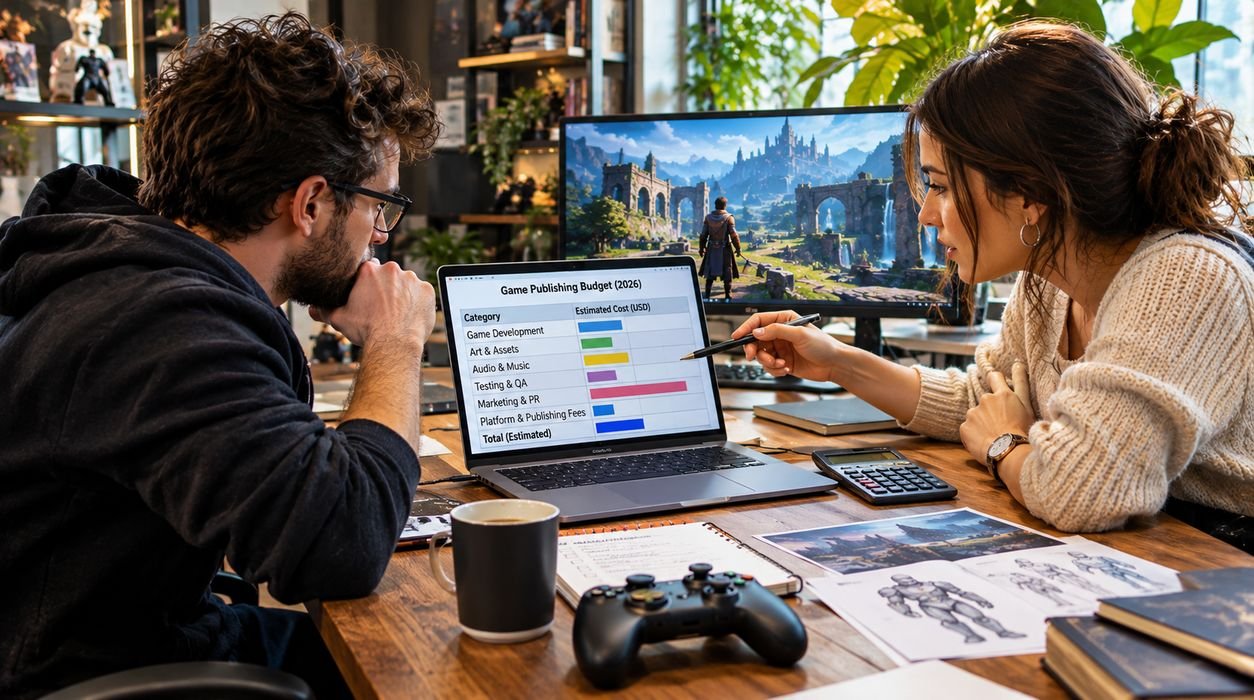
Publishing a video game can cost as little as a few dollars in direct expenses or require hundreds of thousands of dollars when development, marketing, and professional services are included.
For independent developers, understanding the cost to publish a video game is essential before choosing a distribution platform, hiring contractors, or approaching potential investors.
The good news is that releasing a PC game no longer requires signing with a traditional publisher. Digital storefronts such as Steam, the Epic Games Store, and itch.io allow eligible developers to distribute games directly to players.
However, paying a storefront fee is only one part of the financial picture.
Game development, artwork, sound design, testing, localization, advertising, and ongoing support can significantly increase the total budget.
This 2026 guide explains actual publishing platform fees, practical development budgets, hidden expenses, revenue-sharing arrangements, and ways to release an independent game without overspending.
How Much Does It Cost to Publish a Video Game in 2026?
The short answer depends on what you mean by publishing.
If you already have a finished game, your direct storefront submission cost may be $0 on itch.io or $100 per game on Steam or the Epic Games Store.
If you still need to develop, test, and market the game, your total expenses could be much higher.
Consider these illustrative project budgets:
| Project Type | Example Total Budget |
|---|---|
| Small hobby project | $0–$500 |
| Solo developer’s commercial game | $1,000–$10,000 |
| Small indie production | $10,000–$75,000 |
| Larger independent production | $75,000–$500,000+ |
These figures are planning scenarios, not verified industry averages. They assume different levels of paid labor, production complexity, and marketing investment.
A developer working independently during spare time might spend very little cash while investing hundreds of unpaid hours.
A professional studio paying full-time salaries will face substantially higher costs.
The most useful approach is to separate publishing fees from development expenses.
1. Steam Publishing Cost in 2026
Steam remains an important digital distribution platform for independent PC developers.
According to the official Steam Direct documentation, Valve charges a $100 USD application fee for each product submitted through Steam Direct.
For example, publishing three separate games generally requires $300 in application fees.
Is the Steam Direct Fee Refundable?
The fee is nonrefundable, but Valve allows developers to recoup it after the game reaches at least $1,000 in adjusted gross revenue from qualifying Steam Store and in-app purchases.
This distinction matters.
Reaching $1,000 in adjusted gross revenue does not necessarily mean receiving $1,000 in profit.
Refunds, taxes, platform revenue sharing, and operating expenses can affect the money ultimately retained by the developer.
Additional Steam Publishing Expenses
Beyond the application fee, developers may need to pay for promotional artwork, trailers, testing, localization, and marketing.
Steam also takes a contractual share of qualifying sales revenue.
That ongoing revenue share is separate from the initial $100 application fee.
Developers should review their current Steamworks distribution agreement before estimating net income.
2. Epic Games Store Publishing Cost
The Epic Games Store provides another self-service distribution option for eligible developers.
In 2026, Epic lists a $100 USD submission fee per game, with applicable local taxes potentially added.
The fee is nonrefundable but can be recouped after the product reaches the platform’s qualifying $1,000 revenue threshold.
Epic Games Store Revenue Sharing
Epic introduced an updated revenue-sharing structure beginning in 2025.
Under its standard terms, developers retain 100% of the first $1 million in qualifying net revenue per product each calendar year.
After that threshold, the standard 88% developer and 12% Epic split applies.
The annual threshold resets on January 1.
These terms apply to qualifying revenue processed through Epic’s payment system. Separate programs and agreements may affect specific products.
Other Epic Publishing Requirements
Developers must meet the storefront’s technical and content requirements.
For example, multiplayer games may need to support crossplay across PC storefronts.
Implementing required features can create development expenses beyond the submission fee.
Epic’s official distribution information provides current details about publishing requirements and revenue sharing.
3. How Much Does It Cost to Publish on itch.io?
itch.io offers a flexible publishing option for independent developers.
Unlike Steam and Epic, itch.io does not require an upfront fee simply to create a project page and upload a game.
Developers can publish free games, paid games, prototypes, and experimental projects.
itch.io Revenue Sharing
itch.io uses an open revenue-sharing system.
Creators can choose the percentage of sales allocated to the platform, including 0%.
The commonly illustrated default is 10%, but developers can configure their preferred percentage.
Payment processing charges and other applicable costs may still apply.
Is itch.io Completely Free?
Uploading a game can be free, but selling it does not necessarily mean receiving the full purchase price.
Payment processors may charge transaction fees, and taxes or other charges may apply.
For small purchases, fixed processing fees can represent a noticeable percentage of revenue.
Review the official itch.io creator payment documentation before setting your game’s price.
For developers experimenting with their first project, itch.io can provide a low-cost way to test distribution and collect feedback.
4. Game Development Costs
Development is often the largest expense in a commercial video game project.
The total depends on the game’s complexity, team size, development duration, and geographic location.
A simple puzzle game might be created by one person using existing tools.
A multiplayer role-playing game may require programmers, artists, designers, server infrastructure, and ongoing technical support.
Solo Developer Costs
A solo developer may already own a suitable computer and use free development tools.
In that situation, direct cash expenses can remain relatively low.
However, personal development time still has economic value.
If you spend 1,000 hours creating a game, that effort represents a substantial opportunity cost even if you never pay yourself a salary.
Small Studio Costs
A four-person studio paying an average fully loaded cost of $5,000 per person per month would spend approximately $20,000 monthly on personnel.
Over 12 months, personnel expenses alone would total $240,000.
This hypothetical calculation excludes marketing, equipment, software, legal services, and other operating expenses.
Development timelines also affect budgets.
Our guide to choosing the right gaming platform explains the differences between gaming ecosystems, which can help developers understand why targeting multiple platforms increases technical requirements.
5. Game Engine and Software Expenses
Game engines provide the tools developers use to create interactive environments, gameplay systems, and user interfaces.
Popular options include Unity, Unreal Engine, and Godot.
Their licensing models differ, and commercial terms can change.
Free Development Tools
Some engines and development applications are available without an upfront license payment.
However, free access does not necessarily mean every commercial use is unrestricted.
Certain tools have revenue thresholds, subscription requirements, or royalties.
Paid Software
Studios may also purchase applications for 3D modeling, animation, audio production, project management, and testing.
Subscription costs can accumulate over a long development period.
Before selecting tools, calculate their expected cost over the entire project rather than considering only the first month.
6. Artwork and Animation Costs
Visual assets are another important part of a game publishing budget.
A game may require characters, environments, user interfaces, promotional illustrations, icons, and animations.
Costs depend on visual complexity and whether assets are created internally or outsourced.
Using Premade Assets
Premade asset packs can reduce development time and cash expenses.
However, developers must check the license terms before using assets commercially.
Hiring Artists
Professional artists may charge hourly, daily, or project-based rates.
A small set of interface icons may be relatively inexpensive, while detailed character models and animations can require extensive work.
For a modest independent project, an illustrative artwork allowance might be $500–$5,000.
This is a sample budgeting range, not a universal market price.
7. Music and Sound Design Expenses
Audio contributes significantly to a game’s atmosphere and player experience.
Common expenses include background music, sound effects, voice acting, recording, and audio implementation.
Affordable Audio Options
Developers can use appropriately licensed sound libraries or create their own effects.
Some libraries provide free commercial-use assets, while others require payment or attribution.
Custom Music
Hiring a composer can create a distinctive soundtrack, but costs vary according to the number of tracks, recording requirements, revisions, and licensing rights.
For a small game, a hypothetical audio budget might be $300–$3,000.
More ambitious projects can require substantially larger investments.
Always confirm who owns the recordings and what usage rights your studio receives.
8. Quality Assurance and Game Testing Costs
Testing helps identify technical problems before customers encounter them.
Developers should test installation, gameplay mechanics, save systems, controls, performance, and supported hardware.
Internal Testing
Small teams may perform early testing themselves.
Although this reduces immediate expenses, developers can overlook problems because they are familiar with the game.
External Testing
Hiring independent testers can provide more objective feedback.
Costs depend on testing hours, supported platforms, hardware coverage, and project complexity.
For planning purposes, a small studio might reserve $500–$5,000 for external testing.
A large multiplayer title may require much more.
Testing is not an expense developers should automatically eliminate when reducing budgets.
9. Video Game Marketing Costs
Marketing can be one of the most unpredictable expenses associated with publishing a game.
A developer might gain attention through organic community engagement, while another project may require paid advertising and professional promotional services.
Common Marketing Expenses
These may include:
- Gameplay trailer production.
- Promotional artwork.
- Public relations outreach.
- Social media advertising.
- Influencer campaigns.
- Website development.
- Community management.
- Gaming event participation.
Can You Market a Game for Free?
Developers can promote projects through organic social media posts, development diaries, and relevant communities without purchasing advertisements.
However, these activities still require time.
A practical strategy is to begin audience development before launch rather than spending the entire budget on last-minute advertising.
For studios considering exhibitions, our guide to the biggest gaming events in 2027 discusses events where developers may connect with players and industry professionals.
10. Localization and Translation Costs
Localization helps make a game accessible to players in different languages and regions.
Translation expenses depend on word count, language pairs, technical complexity, and quality requirements.
What Needs Localization?
A game may require translation of menus, dialogue, subtitles, tutorials, store descriptions, and customer support materials.
Some projects also need cultural adaptation.
Budgeting for Localization
Consider a game containing 20,000 words.
At a hypothetical translation rate of $0.10 per word, translating that content into one language would cost $2,000.
Additional editing, implementation, and testing could increase the total.
Developers should prioritize languages based on audience research rather than translating into every available language immediately.
11. Legal and Business Expenses
Commercial game publishing can involve contracts, intellectual property, tax obligations, and business registration.
The required expenses depend on your country, company structure, and publishing arrangements.
Intellectual Property Protection
Developers should confirm that they have appropriate rights to the code, artwork, music, and other content included in their games.
Contractors should provide clearly documented usage or ownership rights.
Publishing Agreements
If you work with a publisher, an attorney experienced in commercial or intellectual property law can help review the agreement.
Professional legal advice may be particularly important when a contract involves long-term distribution rights, recoupment, or intellectual property licensing.
Avoid assuming that a simple contract template protects every business interest.
12. Example Budget for a Small Indie Game
Consider a solo developer creating a modest commercial PC game over several months.
The following example assumes most development work is performed personally and is not paid as a salary.
| Expense | Example Budget |
|---|---|
| Steam publishing fee | $100 |
| Software and tools | $200 |
| Artwork and assets | $1,000 |
| Music and sound | $500 |
| External testing | $600 |
| Marketing | $1,500 |
| Localization | $400 |
| Contingency | $700 |
| Total | $5,000 |
This is an illustrative project budget, not a published industry benchmark.
It also excludes the developer’s unpaid labor, existing hardware, taxes, and ongoing business expenses.
A project using only original or freely licensed assets might spend less.
A studio hiring professional contractors could spend considerably more.
13. Example Budget for a Professional Indie Studio
Now consider a small team working on a more ambitious game.
| Expense | Example Budget |
|---|---|
| Development personnel | $120,000 |
| Artwork and animation | $20,000 |
| Music and audio | $5,000 |
| Testing and QA | $8,000 |
| Marketing | $15,000 |
| Localization | $5,000 |
| Software and infrastructure | $4,000 |
| Legal and administration | $3,000 |
| Platform submission fees | $200 |
| Contingency | $19,800 |
| Total | $200,000 |
This example assumes releases on two storefronts with $100 submission fees each.
It does not imply that $200,000 is the standard cost of developing an independent game.
The budget illustrates how personnel and production expenses can outweigh storefront fees.
14. How Platform Revenue Sharing Affects Profit
Developers should distinguish between gross sales, net receipts, and profit.
Gross sales represent customer spending before relevant adjustments.
Net receipts depend on the contractual definition and may reflect platform fees, refunds, taxes, or other deductions.
Profit is what remains after the developer’s relevant expenses.
Example Revenue Calculation
Suppose a game sells 2,000 copies at $15 each.
Gross customer spending would equal $30,000.
For a simplified scenario, assume a platform retains 30% and there are no other deductions.
The developer would receive $21,000 before development, marketing, and operating expenses.
If total project expenses were $12,000, the simplified profit would be $9,000.
Actual payouts can differ because of taxes, refunds, regional pricing, and contractual terms.
Do not use a simplified example as a substitute for a detailed financial forecast.
15. Is Hiring a Game Publisher More Expensive?
Working with a publisher can reduce the amount of development funding a studio needs to provide upfront.
A publisher may finance production, marketing, localization, or distribution.
In exchange, the publisher generally receives compensation through a negotiated commercial agreement.
Publisher Revenue Sharing
There is no universal publisher percentage.
Terms depend on the project’s risk, required funding, intellectual property rights, and services provided.
Some agreements also allow publishers to recoup specified expenses before distributing revenue.
When Publisher Funding Makes Sense
Publisher support may be valuable when a project cannot be completed with available resources.
However, developers should compare the value of funding and services against the revenue and rights they may surrender.
A publishing agreement should be evaluated over the entire commercial life of the game.
16. Hidden Costs Developers Often Forget
Some expenses are easy to overlook during early planning.
These include:
- Additional hardware for testing.
- Cloud hosting and multiplayer servers.
- Customer support software.
- Accessibility improvements.
- Security and anti-cheat services.
- Unexpected development delays.
- Refunds and payment disputes.
- Post-launch patches.
- Accounting and tax preparation.
- Website hosting and domain renewals.
Online multiplayer games can be particularly expensive to maintain because infrastructure costs may continue even when sales decline.
A realistic budget should include post-launch operations.
17. How to Reduce Video Game Publishing Costs
Reducing expenses does not necessarily mean sacrificing quality.
The most effective savings often come from limiting unnecessary complexity.
Start With a Smaller Project
A focused game with a polished central mechanic may be easier to finish than an ambitious project containing many unfinished features.
Use Suitable Development Tools
Compare licensing costs and technical requirements before committing to an engine or software package.
Reuse Assets Legally
Appropriately licensed asset packs can save time.
Always follow commercial usage restrictions.
Test Early
Identifying technical problems during development can reduce expensive last-minute corrections.
Prioritize Marketing Channels
Choose promotional channels that reach your intended audience rather than advertising everywhere.
Release on One Platform First
A PC-first release may reduce simultaneous testing, certification, and porting responsibilities.
Additional platforms can be considered later if the project supports expansion.
18. How Many Copies Must You Sell to Break Even?
Break-even analysis helps developers estimate how many sales are required to recover their expenses.
The basic calculation is:
Break-even copies = Total fixed project costs ÷ Net contribution per copy
Suppose your game has $10,000 in fixed costs.
You sell it for $20 and estimate that $14 per copy remains after variable platform-related deductions.
Your break-even point would be approximately 715 copies, assuming no additional variable costs.
This calculation is only a starting point.
Refunds, discounts, regional pricing, taxes, and ongoing operating expenses may change the actual number.
A realistic financial model should test several sales scenarios, including disappointing outcomes.
19. Should You Publish Your First Game for Free?
Free releases can help developers build experience, gather feedback, and introduce their work to potential players.
However, a free game is not automatically inexpensive to create or maintain.
Development, hosting, and support costs may still apply.
Some developers release free prototypes before developing a larger commercial project.
Others use free games to build a portfolio or experiment with new mechanics.
The decision should reflect your goals.
If your primary objective is learning, a free release may be worthwhile.
If you need revenue to support a professional studio, you should carefully evaluate your monetization strategy.
Frequently Asked Questions
How much does it cost to publish a game on Steam?
Steam charges a $100 USD application fee per product. The fee can be recouped after the product reaches at least $1,000 in qualifying adjusted gross revenue.
Is it free to publish a game on itch.io?
Yes. Developers can create project pages and upload games without paying an upfront publishing fee. Revenue sharing, payment processing, and other applicable charges may affect paid sales.
How much does Epic Games charge to publish a game?
Epic lists a $100 USD submission fee per game, plus applicable local taxes. The fee is recoupable after the qualifying revenue threshold is met.
Can I publish a video game with a $1,000 budget?
Potentially. A developer who already owns the necessary equipment and performs most production work personally may release a small project within that cash budget. Unpaid labor and other indirect costs still matter.
What is the biggest expense in game development?
For many professional projects, personnel expenses represent a major cost. However, the largest expense varies by game type and production model.
Do I need a publisher to release a PC game?
No. Eligible developers can self-publish through supported digital storefronts, subject to each platform’s requirements.
How much should I spend on game marketing?
There is no universal amount. Your budget should reflect the game’s audience, expected revenue, available resources, and promotional strategy.
Is publishing a game profitable?
It can be, but profitability is not guaranteed. Developers must generate enough revenue to cover production, distribution, marketing, and operating expenses.
Final Thoughts
The cost to publish a video game in 2026 depends on far more than the fee charged by a digital storefront.
Steam and the Epic Games Store each charge $100 per game, while itch.io allows developers to upload projects without an upfront fee.
However, development, artwork, sound design, testing, marketing, localization, and ongoing support can make the total investment substantially larger.
For a solo developer, publishing a small game with limited cash expenses may be realistic.
For a professional studio, personnel and production costs can quickly reach tens or hundreds of thousands of dollars.
The most important step is creating a budget based on your actual project requirements.
Separate essential expenses from optional improvements, account for unexpected delays, and estimate how many copies you must sell to recover your investment.
A successful publishing strategy is not necessarily the cheapest one. It is the approach that gives your game a realistic opportunity to reach players while keeping financial risk manageable.


